Aerodynamic socks and fingertip grip gaming mice
, by Patrick SchmalzriedA few months ago someone in the Zaunkoenig Discord wrote the following:
«It sounds like a very redditor thing to say … But the top performers of any game dont use ftip»
Ever since we launched the Zaunkoenig M1K on Kickstarter, way back in 2019, we have heard this line of thinking in one form or another. It usually boils down to this: if fingertip grip mice are so much better, why do the best players not use them?
To answer that question let us take a small detour into the world of professional cycling.
Aerodynamic bikes
Aerodynamic bikes had already shown what they could do back in 1989. On the final stage of the Tour de France, US cycling legend Greg LeMond trailed Frenchman Laurent Fignon by 50 seconds. Most people thought he had no chance. With nothing to lose, he went full aero — teardrop helmet, triathlon bars on his bike. Critics called the setup ugly, dangerous, and outright stupid. LeMond proved them wrong, winning the stage by 58 seconds; enough to take the whole Tour.
You would think that changed everything. It did not.
Fast forward to 2002, when Gérard Vroomen of Cervélo went to see Tour de France team CSC. He was on a mission. Cervélo had built an aerodynamic bike and needed a pro team brave enough to bet against the mantra that weight was king.
Team CSC took the gamble. They never looked back. In 2002 they were 14th in the UCI World Ranking. In 2005, just three years after the deal with Cervélo, they were ranked as the number one team.
You would think the cycling world had finally learned: aerodynamics matter.
You would be wrong.
Fast forward to 2007. Castelli from Italy had developed an aerodynamic jersey called aero jersey for the Saunier Duval team. An extremely tight, wrinkle-free jersey partially made from extra slippery fabric. Back in 2007 baggy jerseys were the default for cyclists. So it is safe to say that the aero jersey was a very different beast.
The reaction? One guy from Saunier Duval loved it, the rest hated it:
«We brought the Aero jersey out in 2007 with the Saunier Duval team but none of the riders wanted to wear it with the exception of David Millar. He was the guy that understood what we were trying to do. Others were complaining it would be too tight, or they’d be wet on the descents and would catch cold. Guys like [Leonardo] Piepoli knew there were other ways to get performance enhancement, so why should they wear tight fitting clothing? But David immediately got it.»
The aero jersey had a rough debut. As expected, the rest of the peloton was even less enthusiastic. Things only changed in 2009. The Cervélo TestTeam — newly founded and not exactly stacked — briefly reached the top of the rankings. They had gone all-in on aerodynamics. And it added up.
By 2014 there still were quite a few world tour teams that did not have aerodynamic bikes. By 2015/2016 however the majority of Tour de France teams were using aerodynamic bikes and clothing: aerodynamic tube shapes, integrated cockpits and wrinkle-free jerseys.
The death of the climbing bike
Fast forward to the year 2023: not only is every team using aerodynamic bikes on flat sections. Aerodynamic bikes have become so prevalent they are very commonly used even when going uphill. For a while it looked as if climbing bikes would come out whenever the road tilted up even slightly. Ironically, most teams stuck with aerodynamic bikes even on steep climbs. When you go up a hill at 20 kilometers per hour or more, aerodynamics trumps weight.
Four times Tour de France winner Tadej Pogačar learned this the hard way: During the 16th stage of the 2023 Tour de France, an individual time trial from Passy to Combloux (22.4 kilometers). The stage had rolling/flat sections early on, a short descent, and then the final ~6 kilometers uphill drag to the finish in Combloux. Pogačar started the stage on his aerodynamic time trial bike, a Colnago TT1. So far, so good: when there barely is any gradient an aerodynamic bike obviously is the superior choice.
After the rolling/flat section was over however, Pogačar switched to a lighter climbing bike, the Colnago V4Rs. Bad move on several counts. Swapping bikes costs time. Accelerating the second bike costs more time. And worst of all: the aero bike was probably faster up the climb anyway. The average gradient of ~6.8 percent just was not steep enough to make the climbing bike superior.
Pogačars rival, Jonas Vingegaard, simply stayed on his aerodynamic bike (a Cervélo P5) and was quicker by a minute and 38 seconds. Not subtle.
This time trial was one of the decisive moments of the 2023 Tour de France. Vingegaard extended his lead significantly, and Pogačar was never able to close the gap, ultimately finishing second overall, more than 7 minutes behind Jonas Vingegaard.
These days Pogačar is riding his aerodynamic bike almost every opportunity he gets. Only very rarely does he use his climbing bike.
In barely two decades aerodynamic bikes have nearly killed off climbing bikes. Before the end of the decade the climbing bike might have vanished from the Tour de France entirely.
The climbing bikes last hope is an old UCI rule from 2000 that dictates that bikes must weigh at least 6.8 kilograms. Scrap that rule and climbing bikes might see more action again — you can easily build one at 5 kg these days. But the UCI is in no hurry to change it.
Aerodynamic socks
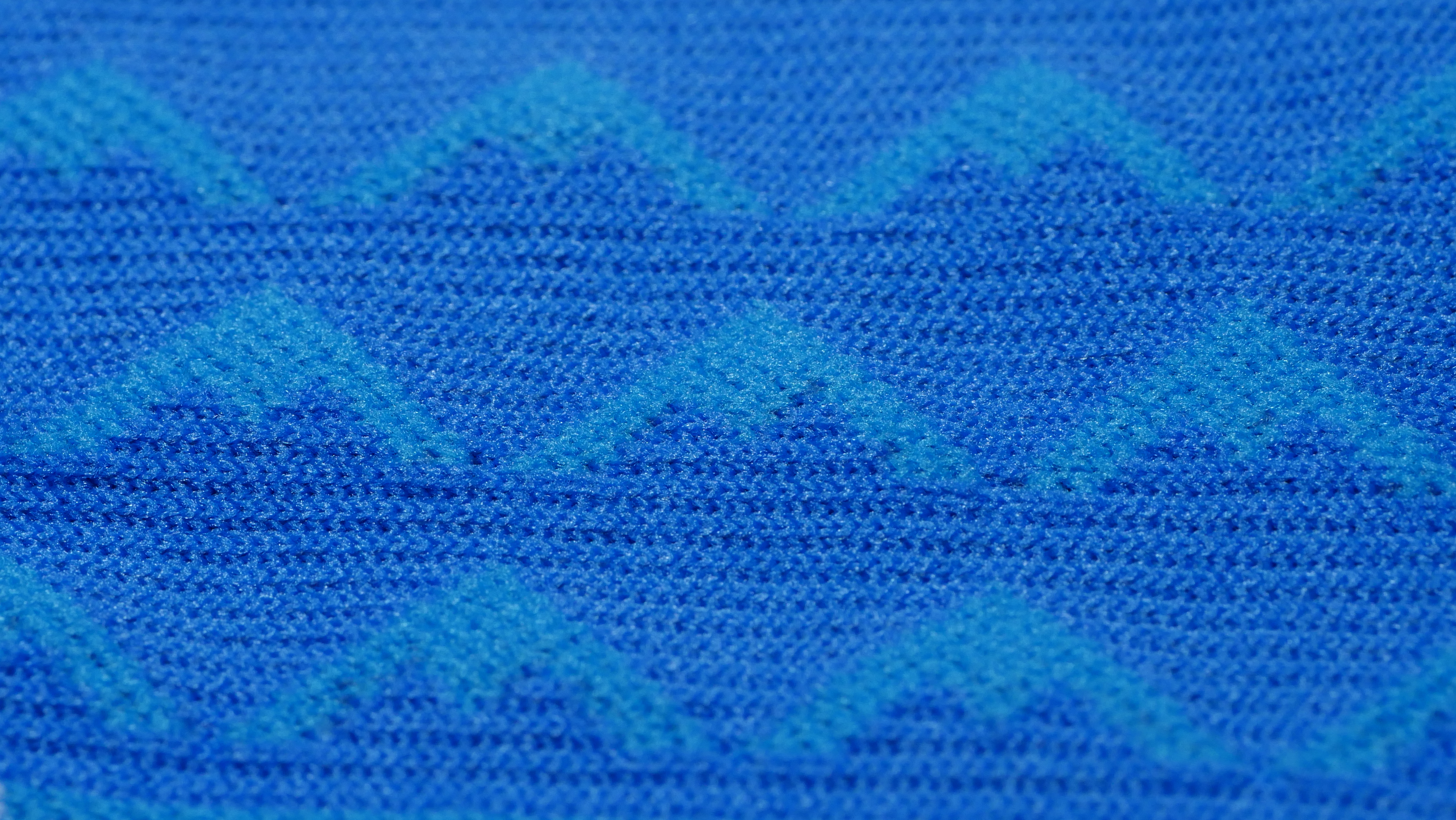
These days there are not many bike components that have not undergone an aerodynamic overhaul. Even socks went aerodynamic. And according to Josh Poertner from Silca they are shockingly effective. The way aerodynamic socks work is that they use a 3D structure to keep the air on the sock for longer. That reduces turbulence and thus saves you energy. See the following picture for such a 3D structure:
Imagine going back to the year 2001, the year before Cervélo sponsored team CSC, telling professional cyclists that they should wear aerodynamic socks. They would laugh you out of the team bus. And yet, in the year 2026, aerodynamic socks are a thing and most of the cyclists in the Tour de France use them.
«New tech appears and it makes riders faster, but then most riders refuse to use it because it’s something different and is perceived to not be cool. But then someone wears it and wins a race and then all of a sudden everyone starts to use it.»
It makes sense if you look at it through the eyes of a typical seasoned professional: he has built his career on proven tech. Why should he risk it all just to gain a small advantage? The perception changes when someone uses that new tech to win a big tournament. All of a sudden the coin flips and he probably is thinking: How can I afford to not use this new tech, when it could win me a tournament? What if the competition starts using this new tech and I start losing ground?
It all starts with a risk taker, however. Like David Millar, the Scotsman who immediately got Castellis aero jersey, while everyone else just thought it looked ridiculous.
So how long until fingertip grip gaming mice take over? Simple. Someone has to win a major tournament with one first. Preferably a Zaunkoenig. And it probably will not be a famous pro. More likely some hungry newcomer who has nothing to lose and everything to gain.
Who knows. Maybe it is you.